If you’ve spent any time in Downtown Bonita Springs over the past year, you’ve probably felt it – something has shifted. There’s more music drifting through the streets, more neighbors bumping into one another, and a growing sense that downtown is becoming a place to gather, not just pass through.
It wasn’t always this way. What is now Downtown Bonita Springs began as a sleepy fishing settlement called Survey in the late 1800s, later renamed Bonita Springs in 1912 to honor the area’s natural springs. For much of the 20th century, it remained a quiet town, largely off the radar. That changed when the city invested millions into downtown public works – repaving Old 41 with pavers, adding landscaping, improving sidewalks, and creating a foundation for future growth. Slowly, businesses began flowing in, breathing new life into the streets and setting the stage for the community hub we see today.
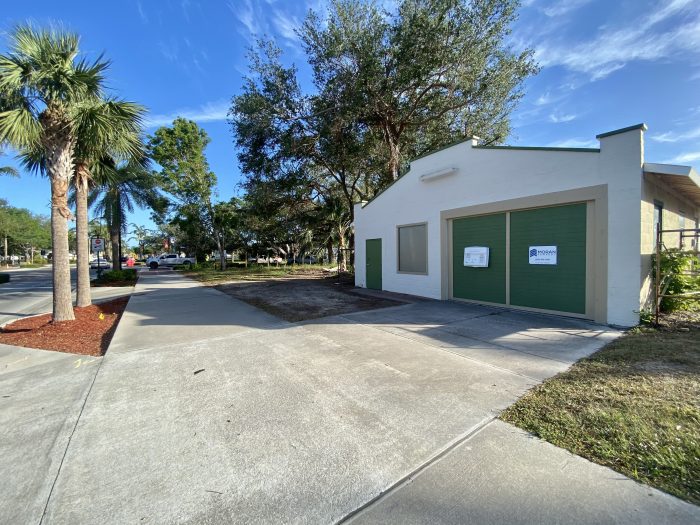
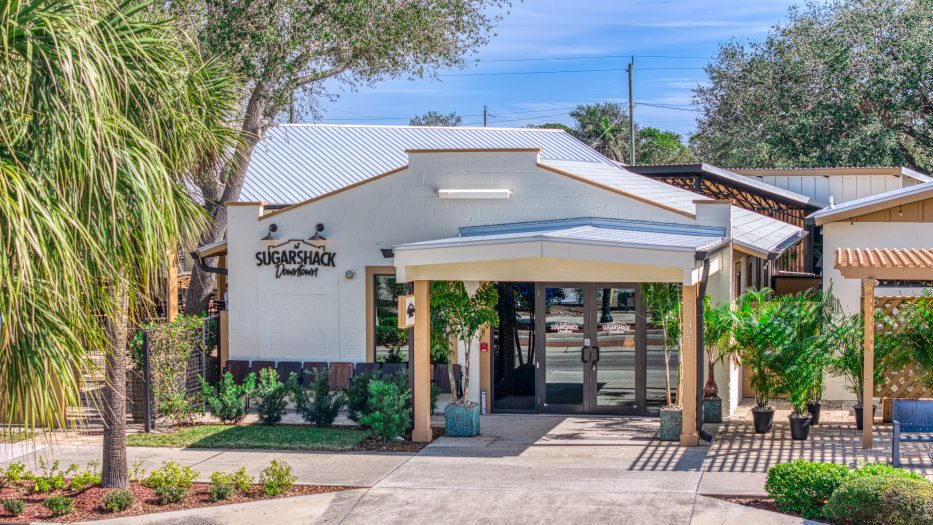
That renewed energy is being shaped by local businesses and community spaces like Sugarshack Downtown, which celebrates its one-year anniversary at the end of January. What was once a long-abandoned, historic transmission shop has been thoughtfully transformed into a live-music-driven restaurant tucked beneath a canopy of old Florida live oaks. With nine live performances each week and a ‘never a cover’ motto, Sugarshack Downtown offers local musicians a stage to be heard while providing a steady stream of live entertainment for the community.
Beyond weekly shows, the space has helped spark a wave of community-focused events that bring Downtown Bonita Springs to life year-round. From summer favorites like Downtown Showdown and Battle of the Bands to the Winter Block Party that expanded into Riverside Park between Christmas and New Year’s, Sugarshack Downtown has played a big role in turning downtown into a destination again. Upcoming celebrations include a First Birthday Bash on January 31st and a St. Patrick’s Day event extending into Riverside Park on March 17th.
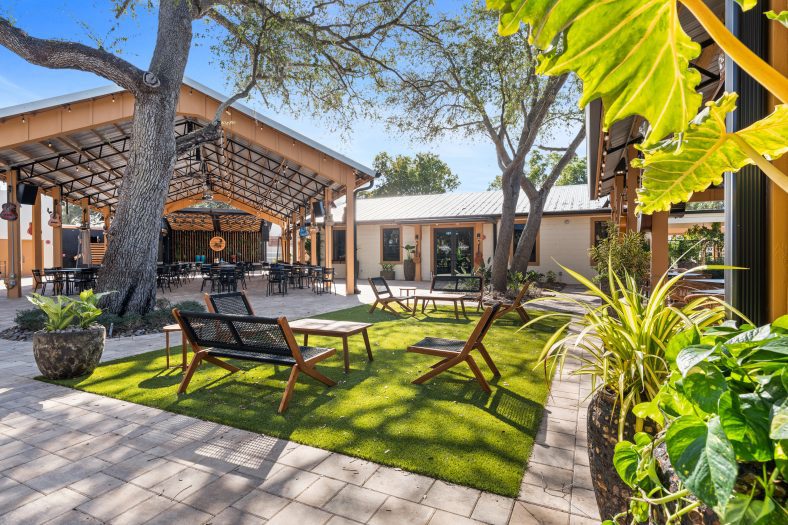
The project has also created more than 150 jobs, many offering benefits like health insurance and 401(k) plans, uncommon in the hospitality world, and has introduced new visitors to a part of Bonita Springs they may not have realized existed. We will get more into the incredible impact the venue has made on our local workforce next week in Part II.
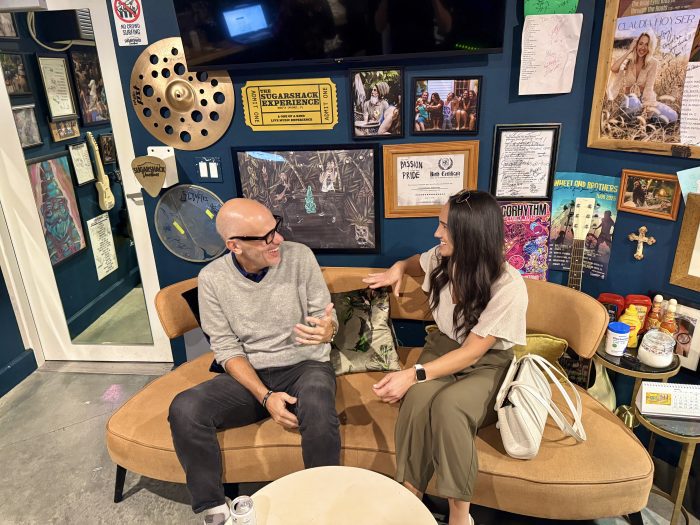
This is the first installment of a three-part conversation with Kyle Moran, principal of family-owned development firm Moran Kennedy and the developer behind Sugarshack Downtown. In this first conversation, we explore the early days of Downtown Bonita Springs and what first drew Kyle to play such a big role in its revitalization. Part two focuses on the community and economic momentum building downtown, along with the story behind bringing Sugarshack Downtown to life. The final installment looks ahead at the long-term vision for downtown and Kyle’s future projects, including a new concept planned for a large undeveloped parcel right in the heart of downtown.
We begin by going back to the start – with Kyle’s earliest impressions of Downtown Bonita Springs.
Bri: Kyle, let’s start at the beginning. When did you first visit Downtown Bonita Springs?
Kyle: My family and I moved from a small town in western Maine to the Worthington Country Club community in East Bonita Springs in 1993. I went to high school here before college in Philadelphia. Back then, in the 1990s, Downtown Bonita wasn’t a destination- it was somewhere you drove through, not to.
Bri: Definitely. And what was your first impression of Downtown back then?
Kyle: Mixed emotions, honestly. It had a lot of the charm you’d hope for- a walkable street grid, beautiful old trees, the Imperial River-but it felt forgotten. Buildings were rundown, trailer parks were everywhere, and it didn’t feel welcoming to the community. It just… felt sad.
Bri: That really resonates. My husband John was born and raised here, and the stories he tells me about Bonita during his childhood have often made me question his young age. It seems so distant compared to what it has become! So, when did it start to change for you?
Kyle: Gradually- but in a big way. The City was incorporated in 2000 and immediately made Downtown a priority. Over the years, they’ve done incredible work: turning trailer parks into public parks, building streetscapes with wide sidewalks, saving The Wonder Gardens, adding pedestrian pathways, burying power lines, and bringing in events like brew fests, music festivals, and art fairs.
But some of the most important improvements aren’t even visible. About a decade ago, the City upgraded the entire stormwater system Downtown. Then, five years ago, they implemented a Form-Based Code. That might sound boring, but without infrastructure and zoning changes like those, revitalization hopes were just wishful thinking.
Bri: I remember when the city made those improvements to Old 41 back in 2016. It was the year my husband got licensed, and we started our newsletter, specifically to spread the news about upcoming projects downtown. But let’s pause there. In plain English, can you explain to our readers what a Form-Based Code?
Kyle: It encourages mixed-use buildings that are close to pedestrian activity- right on the sidewalk, closer together, and designed to evolve as tastes and technology change.
Traditional suburban codes focus on setbacks: “Structures must be at least 25 feet from the road.” A Form-Based Code says, “You can be right on the sidewalk, or at most five feet back, but no farther.” It changes everything about how a Downtown comes together. It’s the difference between a place you drive through and a destination.
Bri: How much of Bonita Springs is under that code?
Kyle: About 400 acres along Old 41, from Terry Street to Bonita Beach Road, and several blocks east and west. For context, Lee and Collier Counties cover nearly two million acres, and only around 1,000 acres in total are governed by Form-Based Codes. Naples has a third of that, Fort Myers another third, and Bonita the remaining third.
Naples adopted its code in 1994 and transformed Fifth Avenue. Fort Myers followed in 2003. Bonita implemented ours in late 2020, and it’s exciting to be in the early chapter of that story.
Bri: It truly is. I think it is really special to have the opportunity to learn from our neighboring cities that have already implemented similar codes, and create something uniquely Bonita.
Kyle: Exactly. And it really matters to the community. In a world dominated by Amazon and Walmart, downtowns offer something you can’t stream: local businesses, real jobs, live music, great food, culture, and above all, human connection.
Bri: I could not agree more. In this digital age, it feels like people are more desperate than ever for human connection. When did Downtown’s potential really come into focus for you?
Kyle: During COVID. With schools shut down, my wife and I spent more time with our kids at Wonder Gardens. For the first time, I could focus on my passion projects. At the same time, the City had completed the stormwater improvements, streetscape updates, and the Form-Based Code. It clicked: Downtown had the DNA to become something unique-a charming, vibrant, and alluring area. Revitalizing Downtown became my dream.
Bri: Did you have any experience in revitalization on such a large scale? Let’s take a step back and dive into your personal story.
Kyle: While I was working with the Miami Marlins, I started studying downtown revitalizations seriously. The Marlins played home games in Little Havana, and they were not drawing in the crowd they should have because of the area at the time. I dove headfirst into Chris Leinberger’s work, including Turning Around Downtown: Twelve Steps to Revitalization, which has been a step-by-step guide. The City completed the first five steps; I am focused on Steps 6 and 7.
Step 6 is creating a “Catalytic Development Company” -a firm that brings all development functions together to tackle complex projects and spark broader transformation. Step 7 is building an “Urban Entertainment District”-not stadiums necessarily, but restaurants, coffee shops, bars, breweries, and live music venues that give people a reason to come downtown and stay awhile.
In Bonita, that foundation was already forming. Downtown Coffee, Chartreuse, For Heaven Shakes, Ceremony Brewing, The Rooftop at Riverside, and others were starting to build momentum.
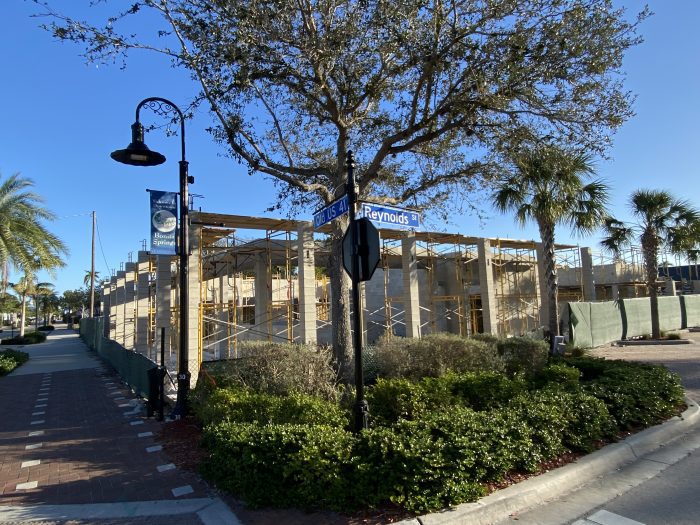
Bri: I think we can agree we are definitely on the right track now. What do you think the downtown corridor needs?
Kyle: We need restaurants and entertainment options. Most people have no idea about the high numbers of six-figure households compared to the very low numbers of full-service restaurants around Bonita Springs. When you compare the area to others like Sarasota and Naples, the imbalance, and therefore the opportunity, is striking.
People here in North Naples, Bonita, Estero, and South Fort Myers live in beautiful homes near world-class beaches, incredible golf courses, and gorgeous waterways,s but they do not have great central spots for community, culture, entertainment, meals, and gathering.”
Bri: I could not agree more. It’s incredibly significant.
Kyle: Yes, and what’s really surprising is the huge imbalance between supply and demand. Downtown Bonita Springs has one of the highest concentrations of underserved six-figure households in SWFL. So many people moved here for a lifestyle that hadn’t yet been built.
Bri: Exactly – a lot of people feel it but haven’t had the context behind it. I’m excited to dig into this more, but this feels like the perfect spot to pause.
Kyle: Absolutely.
Bri: Next, we’ll explore the opportunities in Downtown Bonita Springs – the gaps that existed for years and why they mattered.
Kyle: Yes, the potential here is bigger than most realize. Even experienced local real estate professionals are often surprised by the numbers.
Bri: And we’ll also dive into the story of Sugarshack Downtown just in time for their first anniversary- the vision, the challenges, the team, and why it resonated so quickly with the community.
Kyle: It’s a great story, with a lot of great work from a great team, and I am very proud to be part of it.
Bri: As you should be! We’ll leave it here for now. In Part Two, we’ll unpack the economic and community momentum building Downtown and how projects like Sugarshack Downtown are helping shape its next chapter.
Kyle: Looking forward to it.
Bri: Me too.
Subscribe to our newsletter to be the first to read Part II next Friday!